Bringing the Ocean into the Exhibition Hall: Lanhai Marine at the 30th CIPS
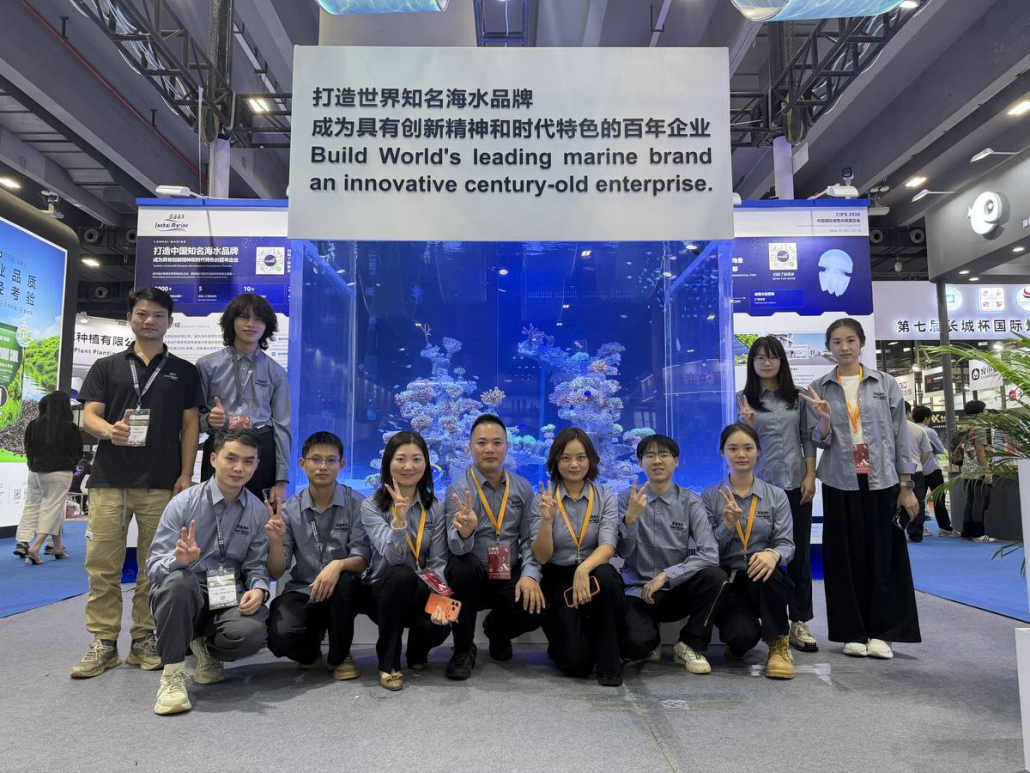
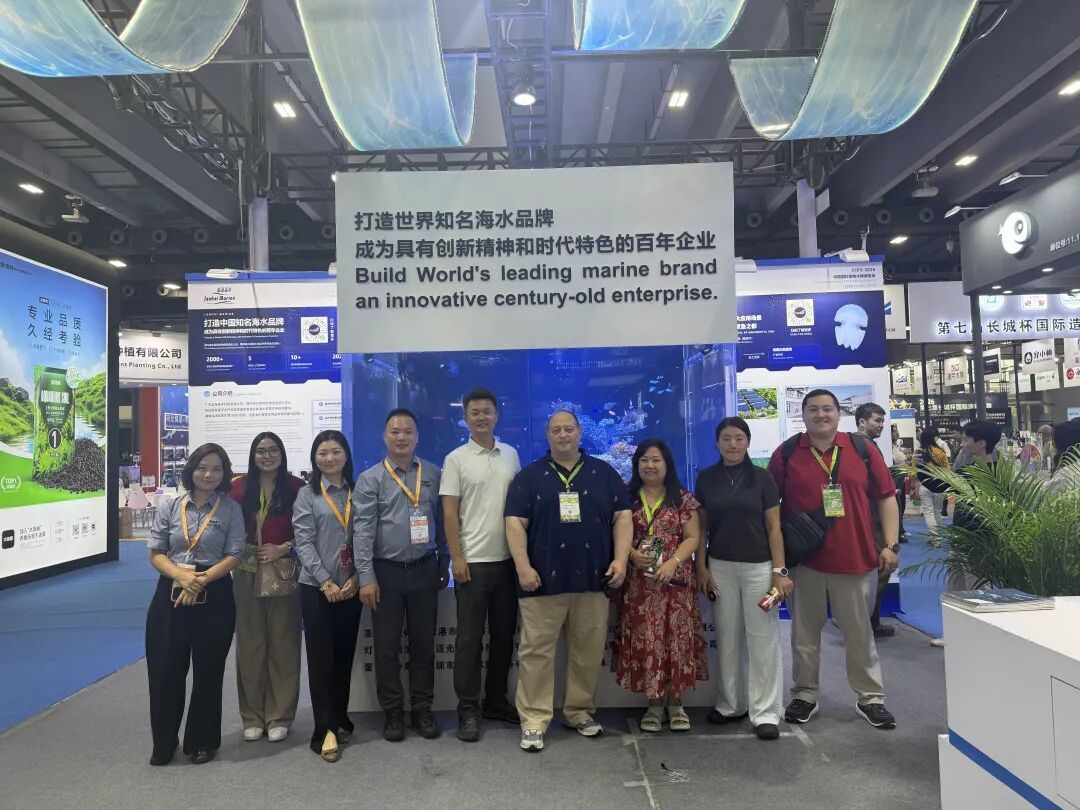
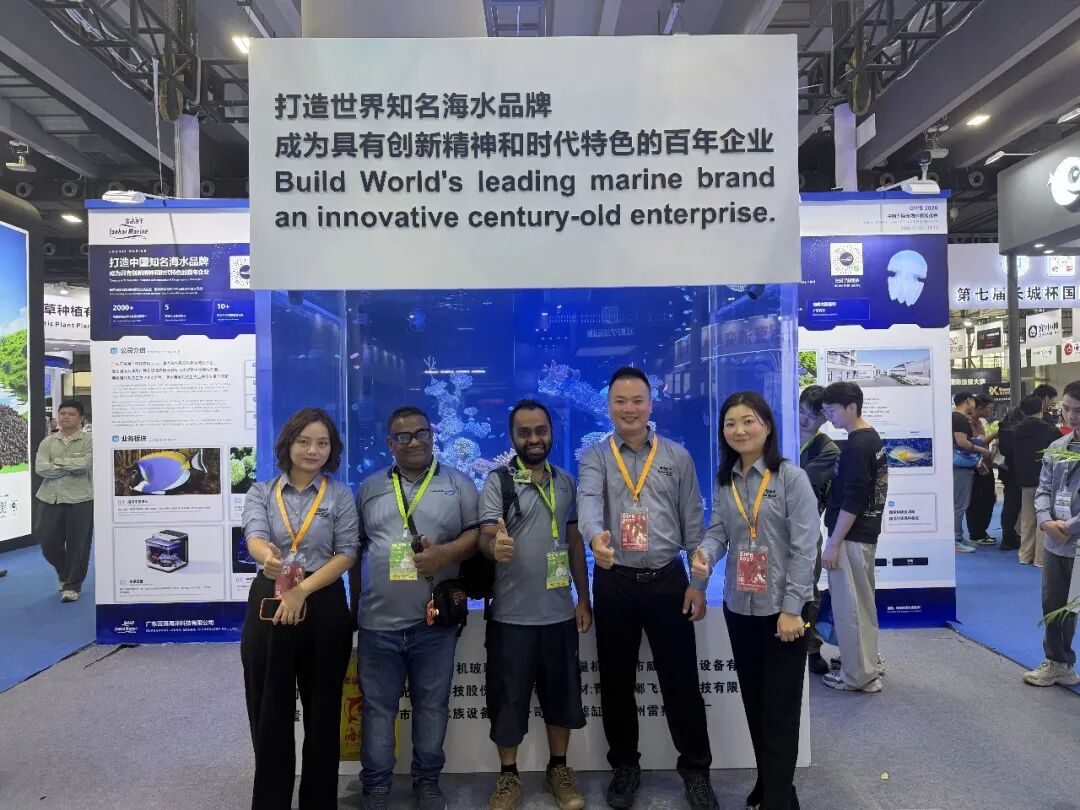
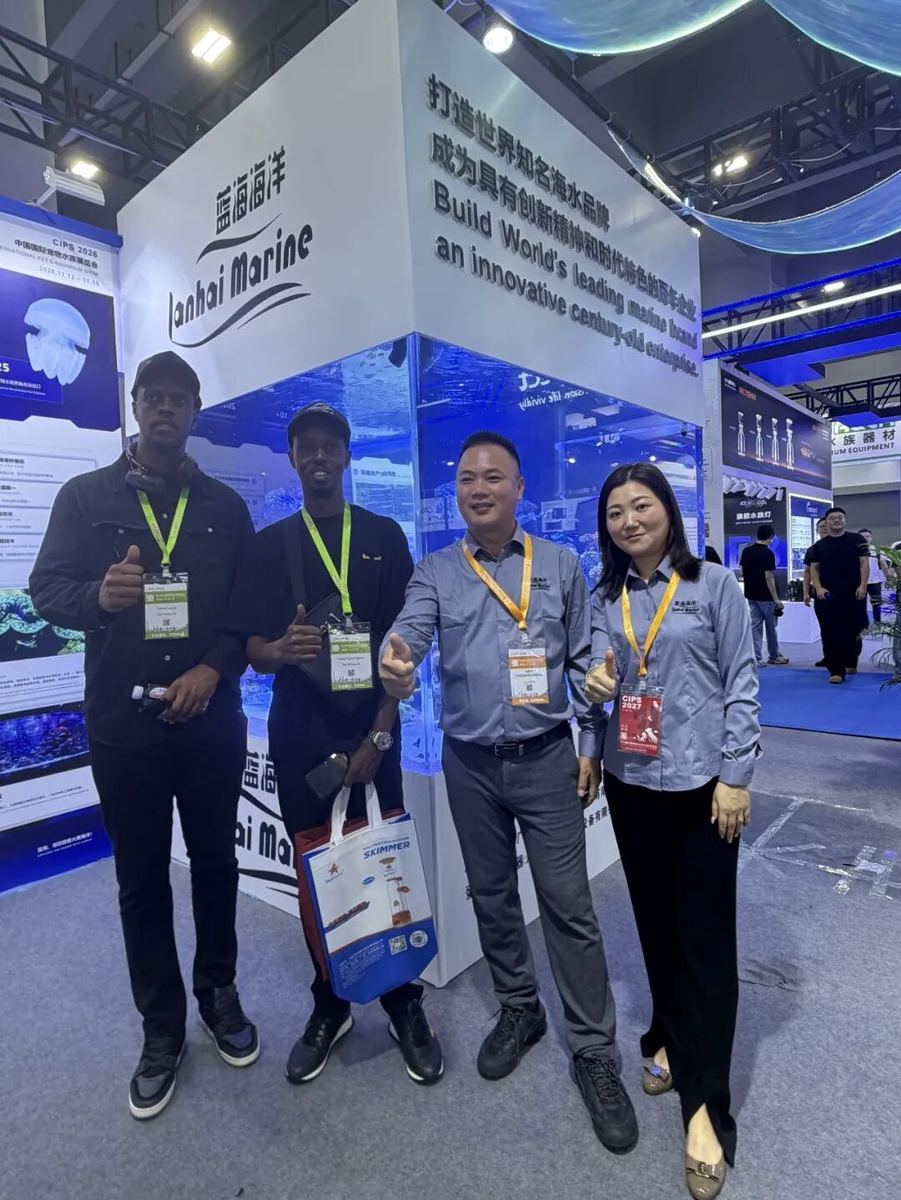
From November 12 to 15, 2026, the 30th China International Pet & Aquarium Show (CIPS 2026) was held at Area B of the Canton Fair Complex in Guangzhou. Under the theme “A New Era for All Living Things in Harmony,” the show drew the attention of the global aquarium and pet industries. For Lanhai Marine, it was a chance to present our core marine ornamental life division alongside our years of breeding and product capabilities to visitors in one place.
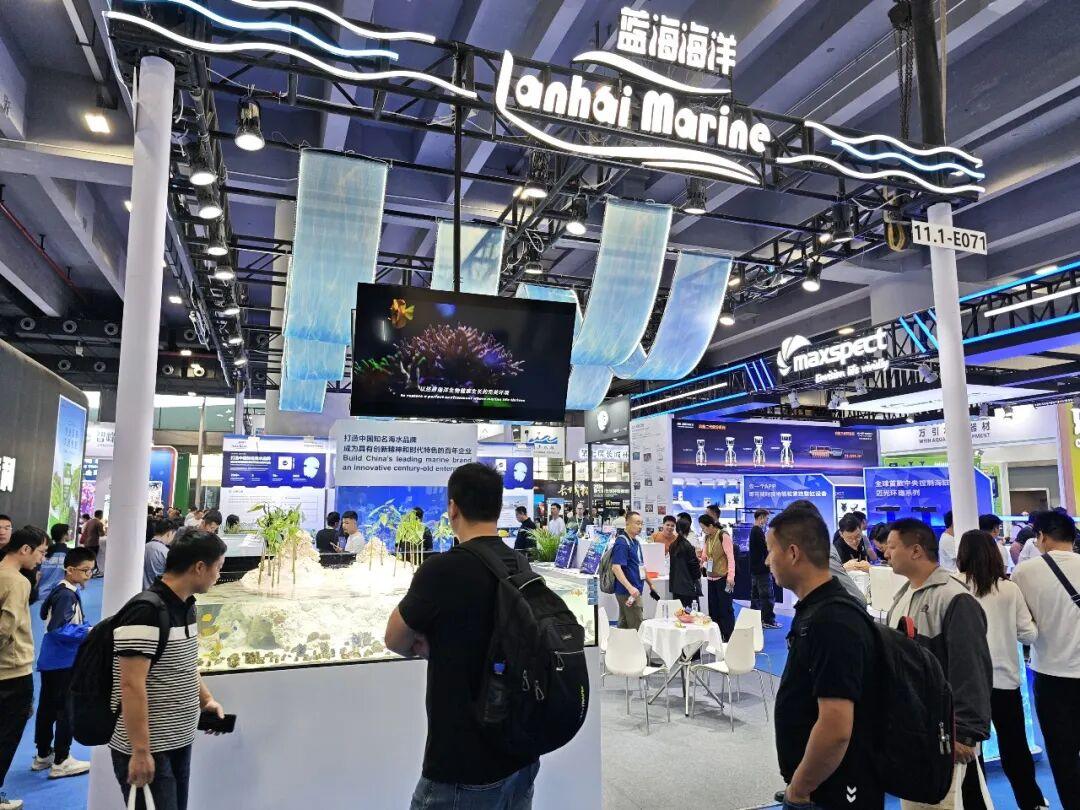
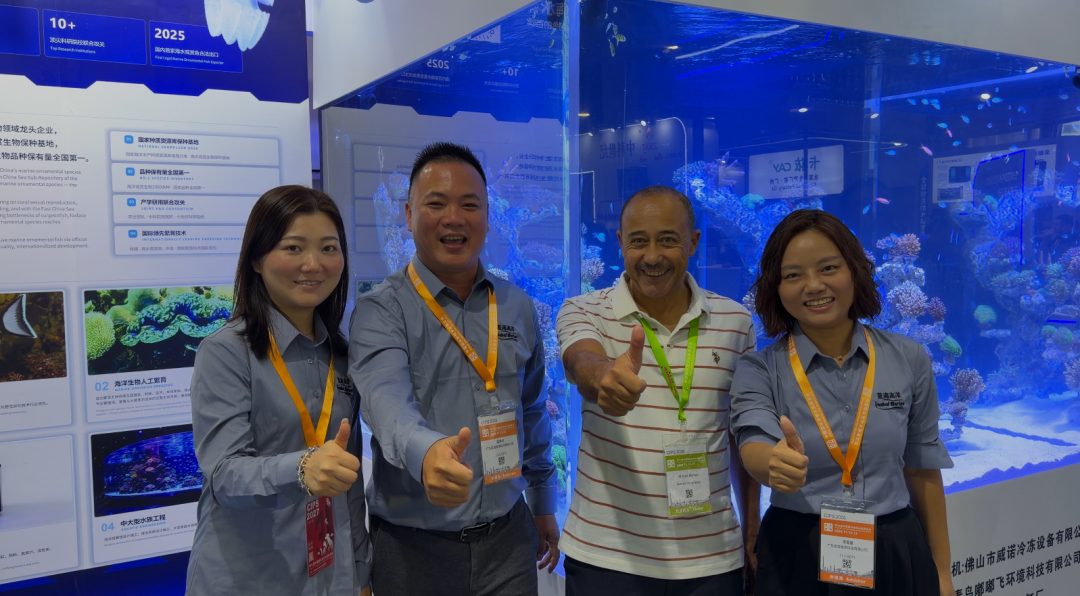
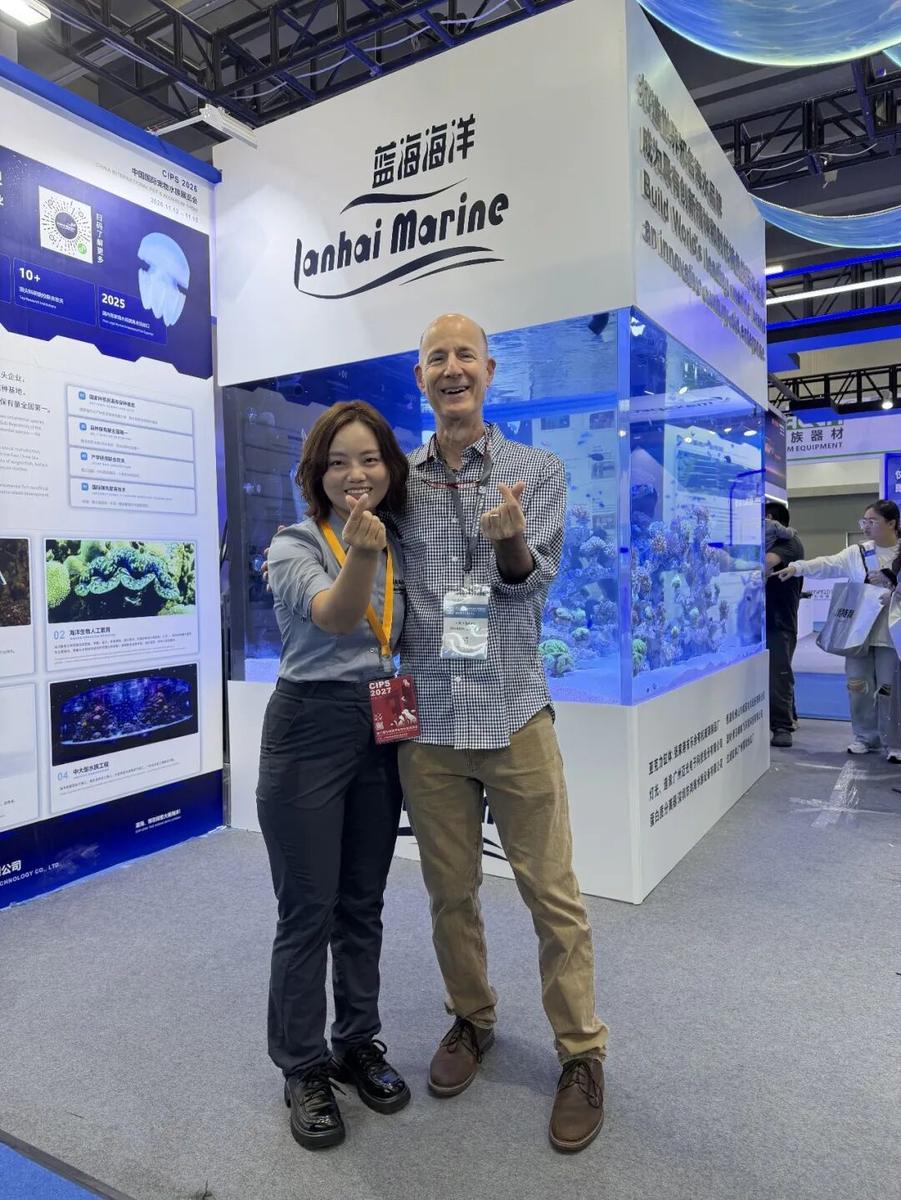
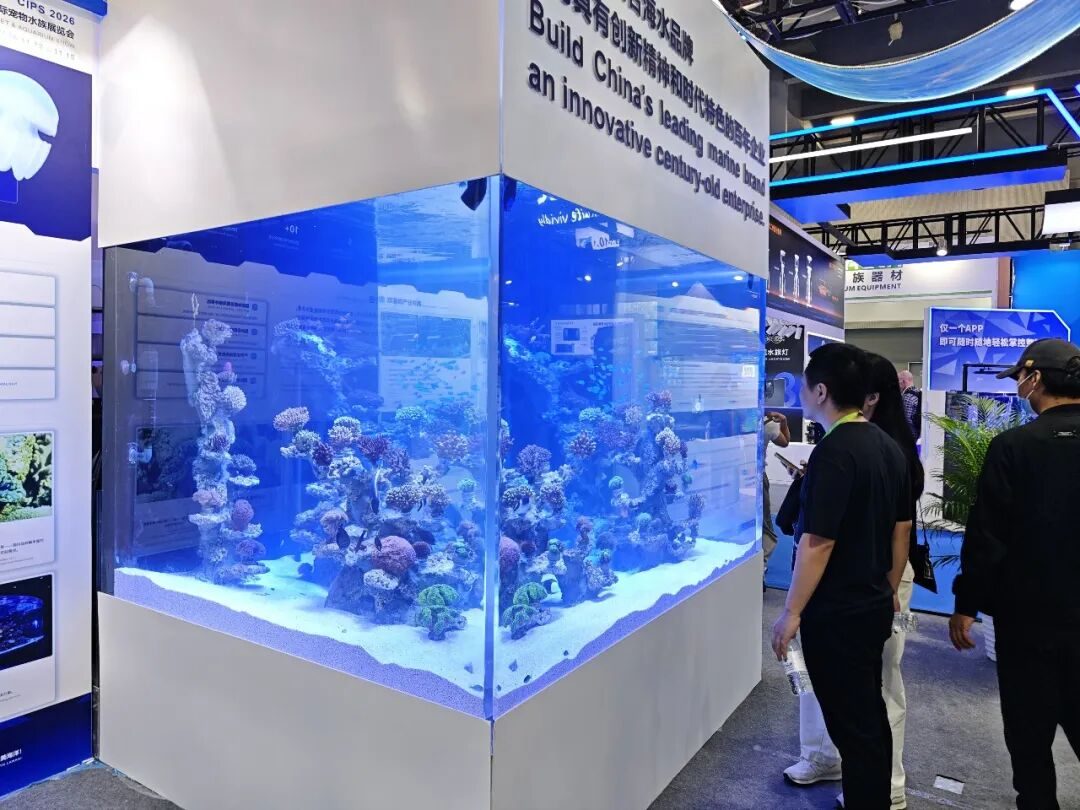
At the center of the booth stood an extra-large acrylic reef tank holding 8 tons of water. Its clear acrylic let visitors see the colors, polyps and flowing movement of the corals up close — many for the first time face-to-face with a “living coral reef.” Within the tight setup schedule, the full relocation, on-site installation and system commissioning of the large reef tank were completed, and the livestock were kept stable and healthy by opening day. This project reflects our integrated delivery capability in engineering design and construction organization, ensuring every project meets its quality standards and milestones.
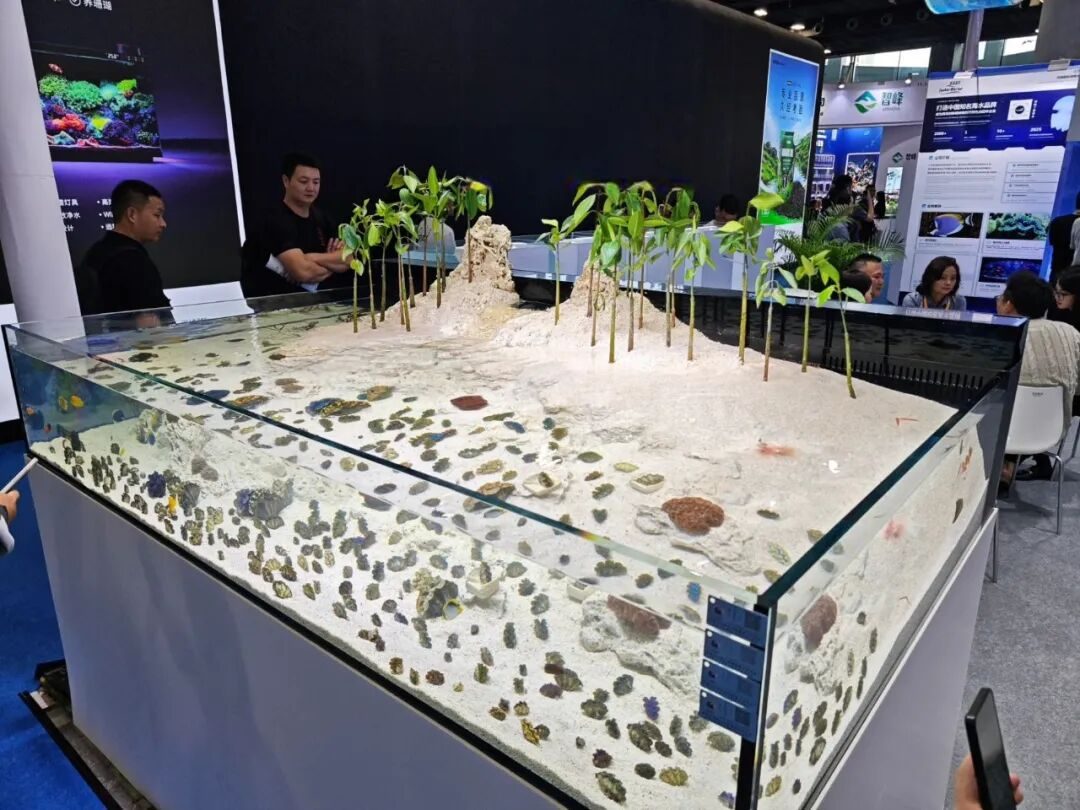
In another corner, the large giant clam tank also drew crowds. The colorful mantles of the clams showed unique patterns and luster under the lights, becoming one of the most photographed scenes of the show.
Giant clams are among the most iconic species of coral reefs, known as the “kings of shells.” Lanhai Marine has long collaborated with the South China Sea Institute of Oceanology, Chinese Academy of Sciences, on artificial breeding and selective breeding of multiple clam species. We have successfully bred five giant clam varieties: Tridacna maxima, Tridacna squamosa, Tridacna derasa, Tridacna crocea and Hippopus hippopus. Through targeted selection by color, pattern and form, once-wild-only traits such as sapphire blue, fluorescent green, gold, brown, radial and wavy patterns have been stabilized into reproducible strain libraries. Customers choosing a clam are also choosing its color family and pattern type.
Even more important is the generational progress. Our clams have now been stably bred through the F2 to F4 generations (second to fourth filial generations). Generations mean traits are heritable and the population can self-renew, so supply no longer depends on any one chance wild collection. Both in technology and output, we have reached an internationally leading level.
That is why, at CIPS, overseas buyers were often the ones lingering longest at the clam tank. Clients from Europe, the Middle East and Southeast Asia repeatedly asked whether supply could be stable and whether selection by color and strain was possible — not just the price. With our artificial giant clam and coral export qualifications in place, these questions are turning into orders.
For the industry, the shift of giant clams from “rare wild specimens” to “breedable, scalable and compliantly exportable” cultured species is a species-level breakthrough. What Lanhai Marine wants is to make this the new normal.
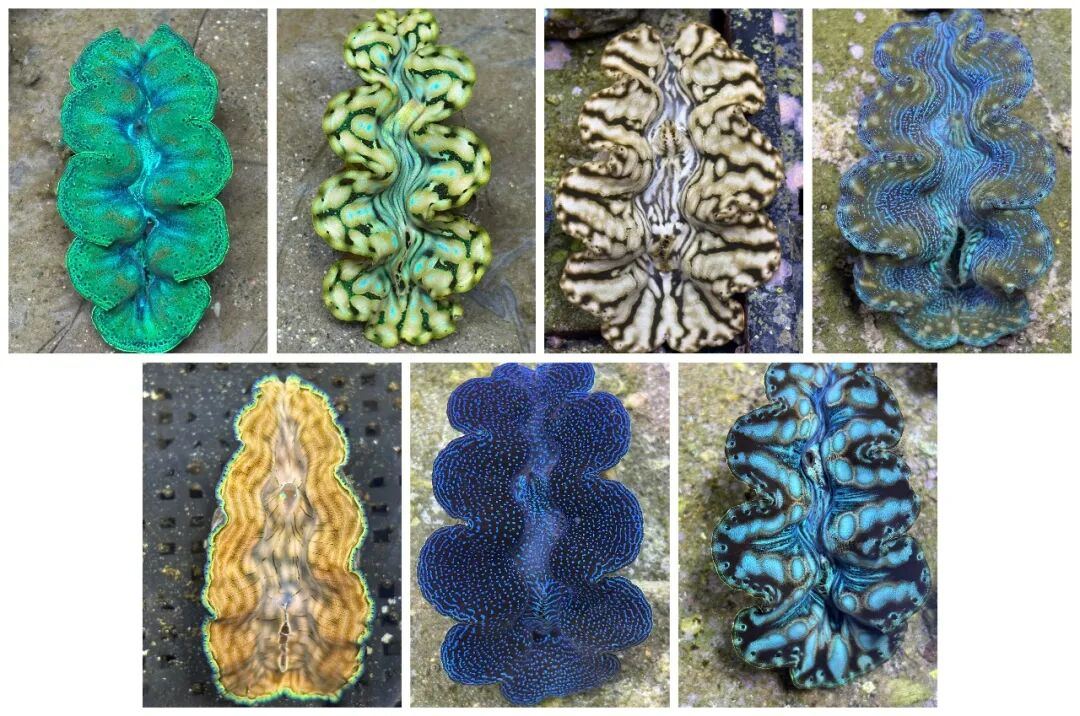
Giant clams of different colors and patterns from Lanhai Marine’s breeding base.
Beyond the “beauty you can see,” we also brought the “technology that keeps them alive.” On display were five jellyfish species bred in-house, each distinct in form and color, giving visitors a direct sense of how stable and controllable captive breeding can be.
The challenge with jellyfish has never been raising them up — it has been where they come from. Ornamental jellyfish supply has long relied on seasonal wild collection, varying with sea conditions and fluctuating by season, so customers largely sold whatever was available that year.
Lanhai Marine’s answer is the polyp. The polyp is the substrate-attached stage of the jellyfish life cycle; it can be stored long-term and cloned asexually, making it the true “seed” of the whole supply chain. We have collected more than 90 jellyfish polyp strains from the world’s major sea regions and built a living germplasm library that ranks among the leading internationally.
With this seed bank, breeding has moved from “depending on the sea” to “producing on demand”: through controlled strobilation, polyps release ephyrae in synchrony, which are then raised stably to adults. Batch consistency, survival rates and delivery rhythm are now controlled by our technology and processes, not by sea conditions.
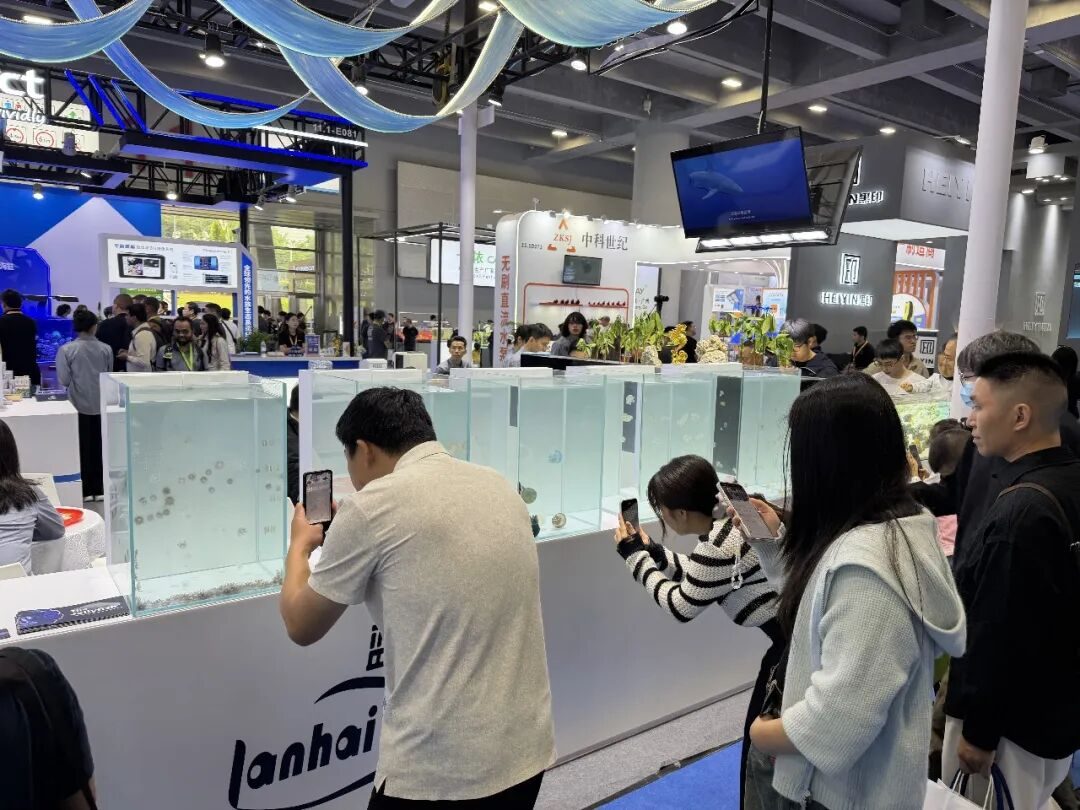
A number of our self-developed products also made their first collective appearance: desktop nano aquariums, refractometers, nitrifying bacteria, sea salt and activated carbon — covering the full chain from beginner desktop tanks to daily care. “Lanhai-made” now extends from livestock to equipment and consumables. (Product Center: https://lanhai-marine.com/products/)
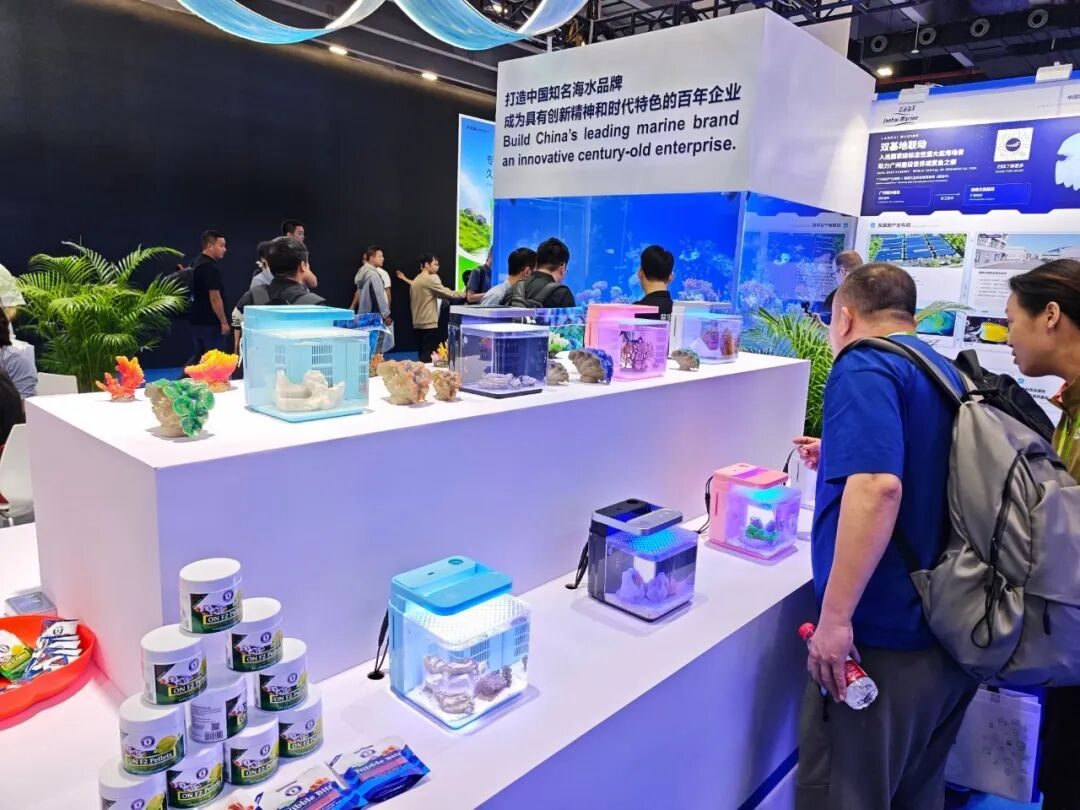
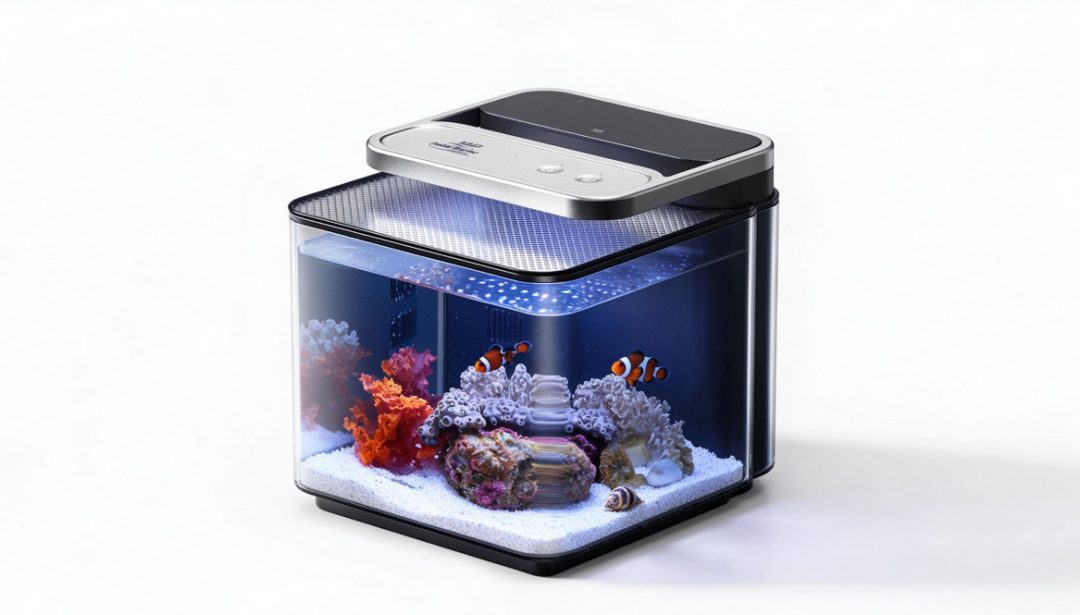
The desktop nano aquarium in particular was designed for beginners — children and office workers alike — with a complete care solution built in (filtration, temperature control, convenient top-off and water changes). It aims to solve the challenges of keeping marine fish, making it simple for anyone to keep a saltwater tank and bringing marine ornamental life into more homes and a broader market.
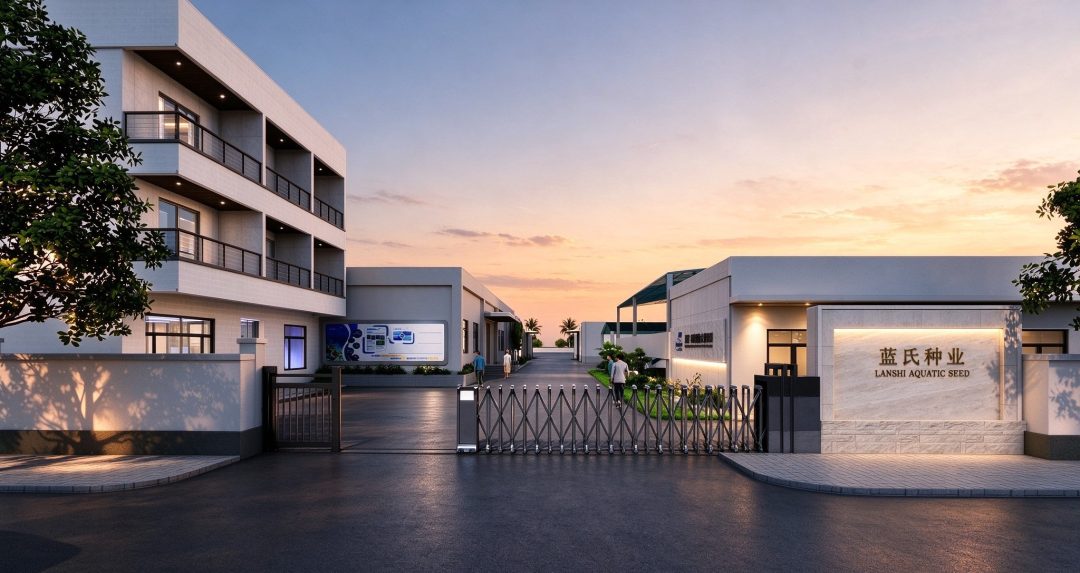
The display boards told the story beyond the booth: the linked layout of our Hainan and Nansha bases. Nansha is being built as a comprehensive marine ornamental life industry base, serving as an industry cluster, supply and trade hub; Hainan focuses on a marine livestock seed R&D base, providing source support for variety innovation and large-scale breeding. This layout extends beyond ornamental life into aquatic commercial species — red spotted grouper, humpback grouper, harlequin sweetlips and filefish, among others, have entered our breeding and supply system; ecological restoration of coral reefs and shellfish has become another main line.
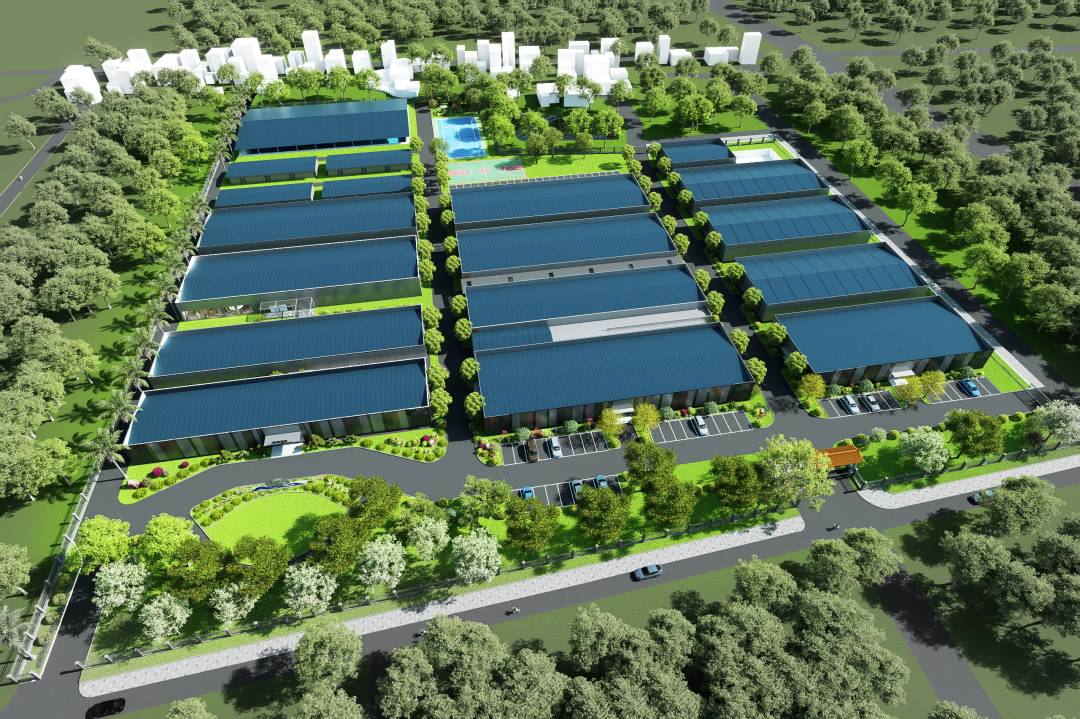
Rendering of the Lanhai Marine Nansha marine ornamental life industry base.
Rendering of the Lanhai Marine Hainan base.
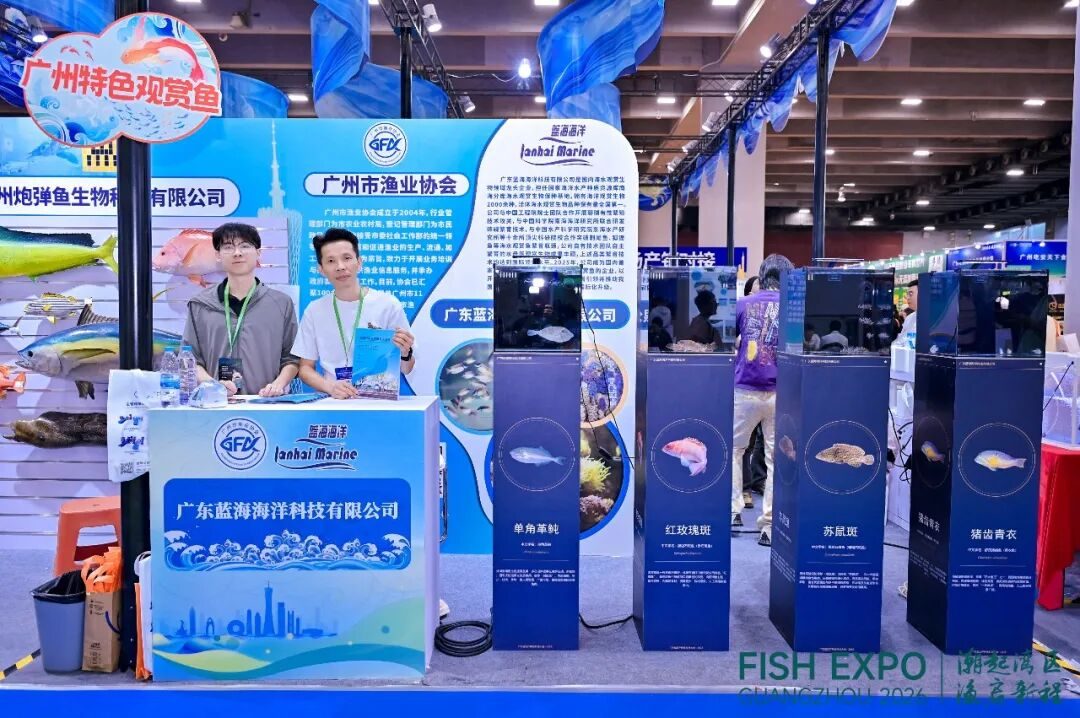
Commercial aquatic species showcased at the show.
Led by our company and in partnership with the South China Sea Institute of Oceanology (CAS), the Sanya Oceanographic Institution of the Ocean University of China, the South China Sea Fisheries Research Institute and the East China Sea Fisheries Research Institute of the Chinese Academy of Fishery Sciences, the College of Marine Sciences of South China Agricultural University, and the Fisheries College of Jimei University, the Guangzhou “Marine Ornamental Life” scenario was selected as one of seven under the “Seed-driven Modern Agriculture Open Industry Chain” and named among the first 136 landmark major application scenarios by the National Development and Reform Commission. A key focus is building a marine ornamental life germplasm library and a “living–gene” collaborative preservation platform, and developing a system for precise germplasm exploration and elite variety development — so that “variety diversity” rests on supplyable, traceable living resources rather than a catalog alone. Linked to the market on one side and the future on the other, the closed loop of “R&D — breeding — supply” has taken shape, laying the foundation for our next capacity expansion and variety growth.
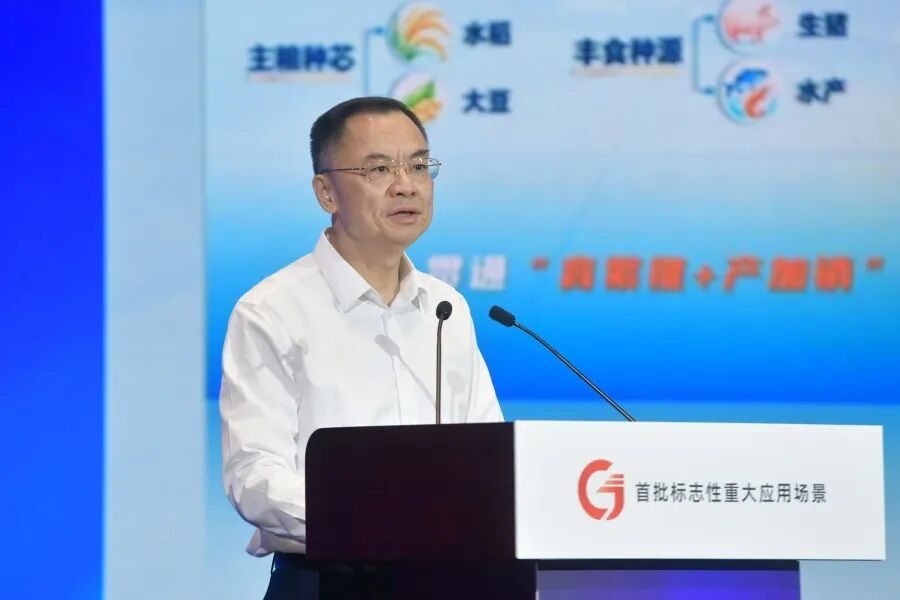
Li Shitong, Director of the Guangzhou Municipal Bureau of Agriculture and Rural Affairs, presents the “Seed-driven Modern Agriculture Open Industry Chain” scenario on stage. Photo: Yang Yaoye, Guangzhou Daily New Huacheng.
As an integrated marine biology company, Lanhai Marine has now obtained export qualifications for farmed giant clams and corals. This is more than a permit: it means our full process is in place across seed-source compliance, breeding records and transport systems. Going forward, there is still plenty of room to grow — both in the depth of our livestock breeding and the breadth of our biological exports.
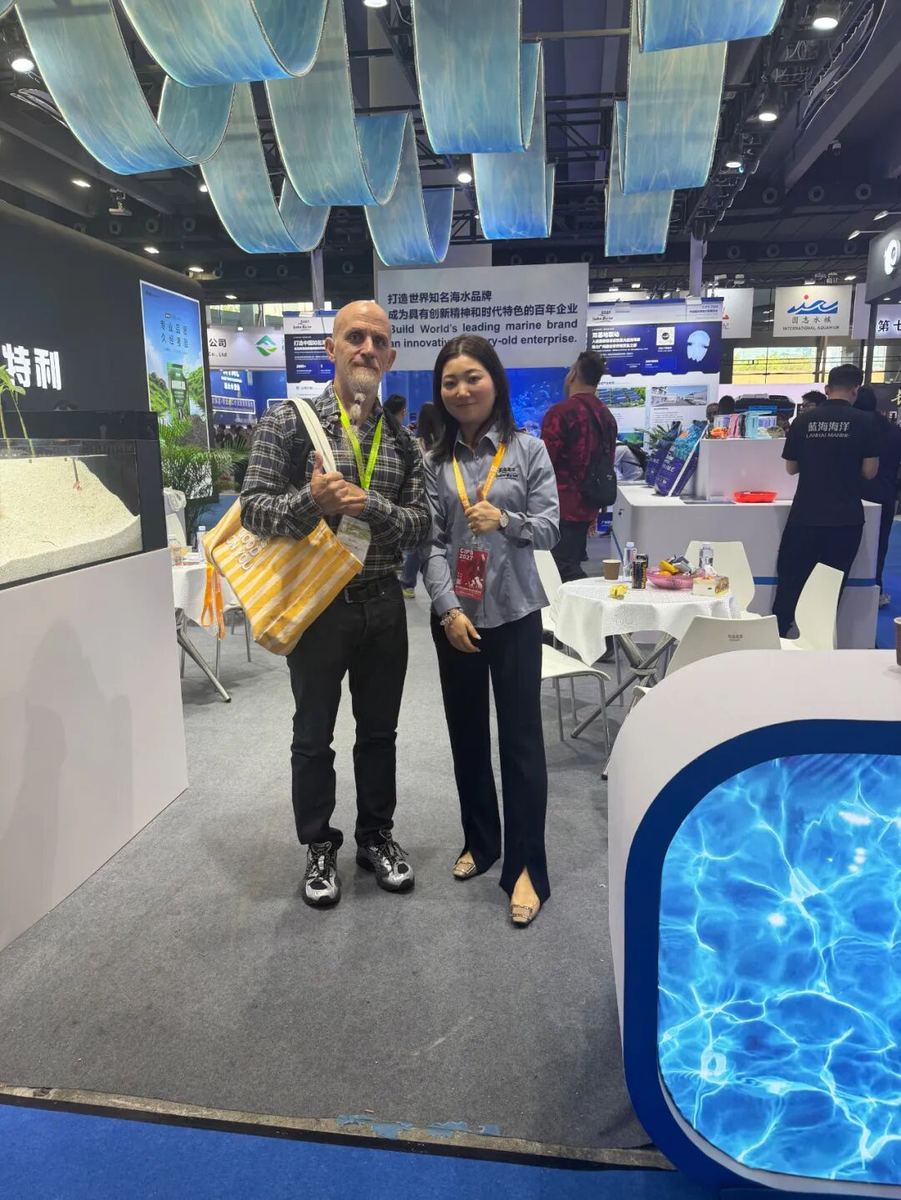
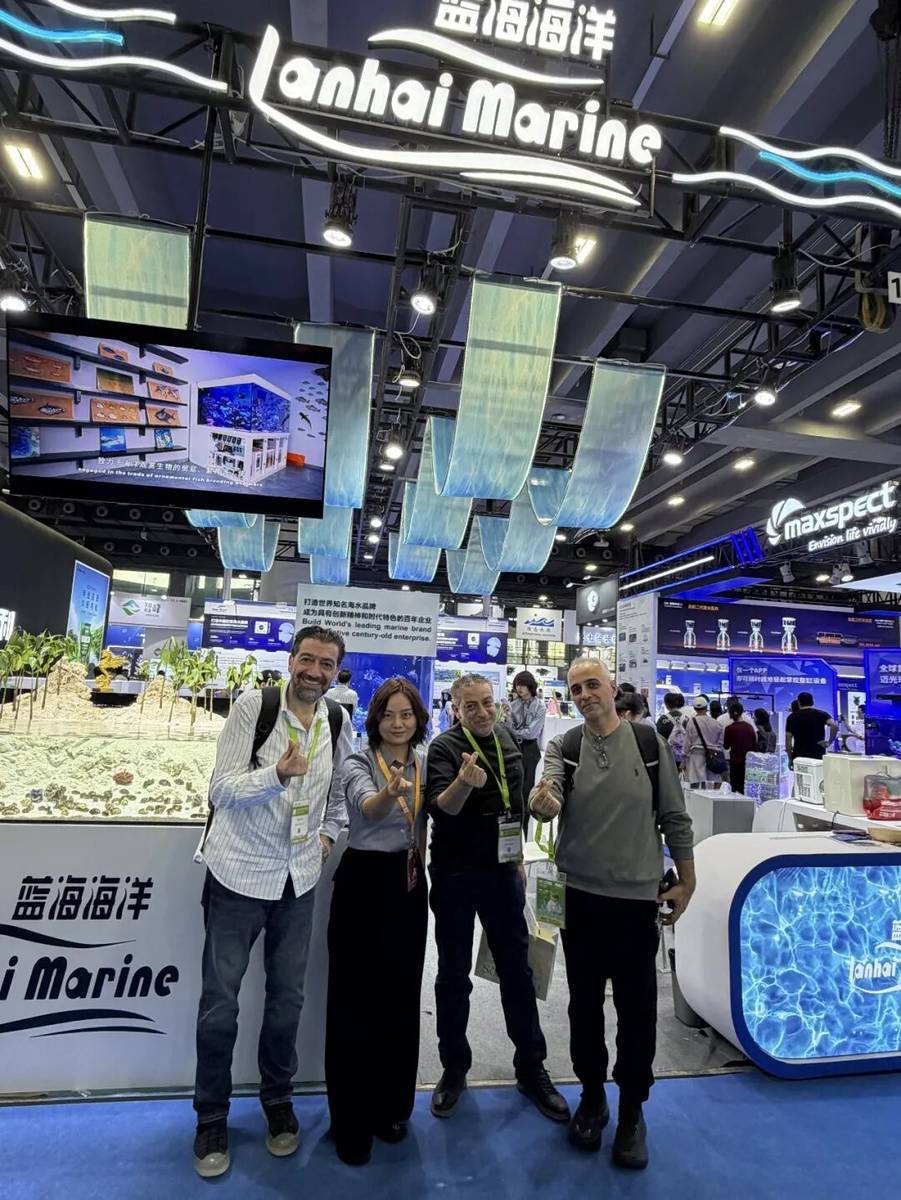
Over the four days of the show, we welcomed old friends and met many new clients and fellow enthusiasts. Thank you to everyone who stopped by our booth. The exhibition lights will go out, but the ocean will not. Lanhai Marine will keep bringing this ocean into more tanks, aquariums and homes.